
Designed for Impact.

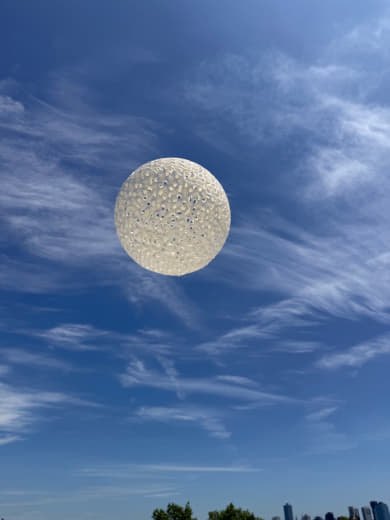
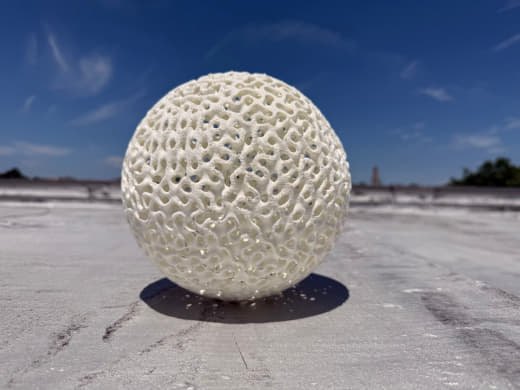
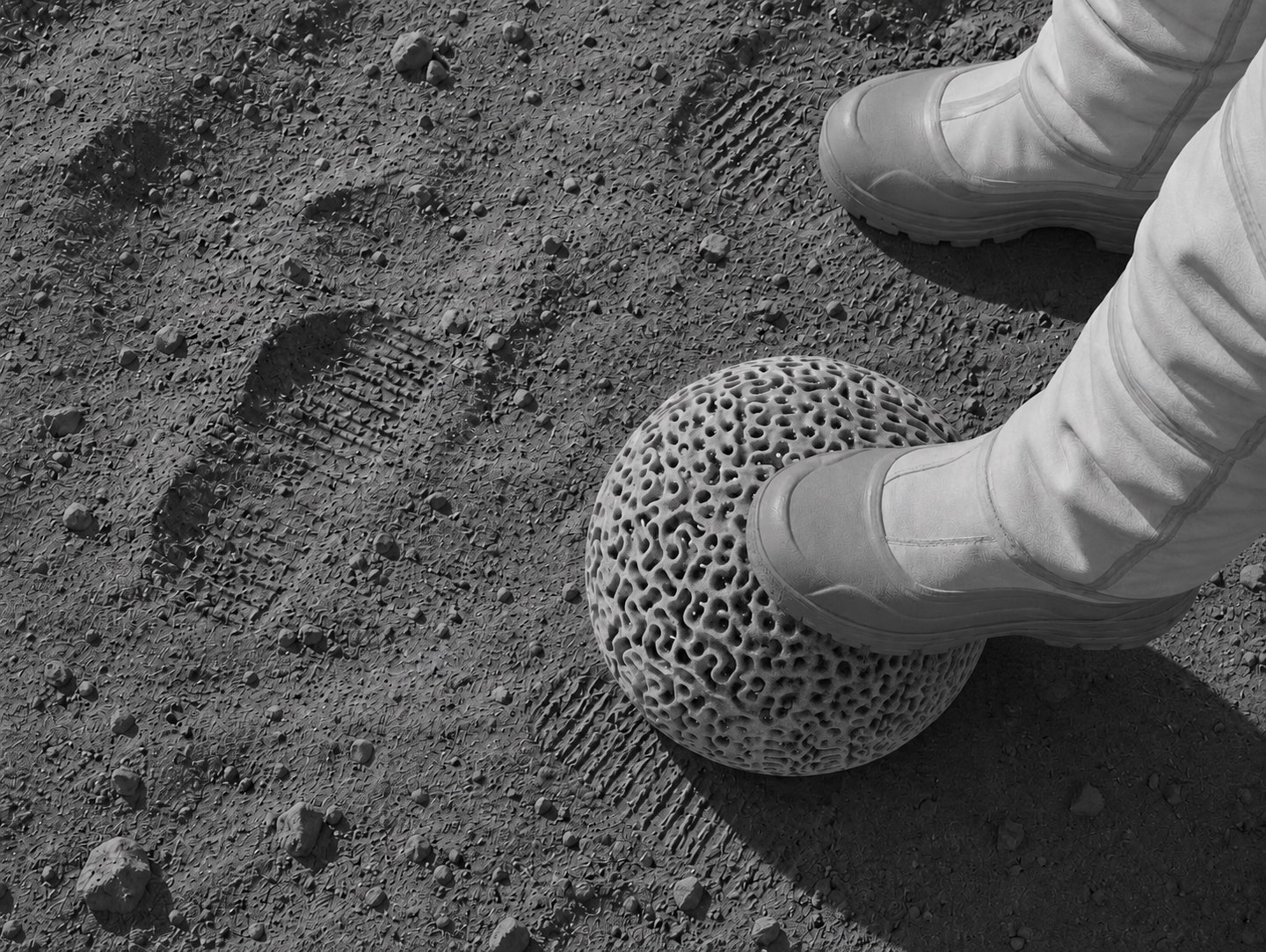
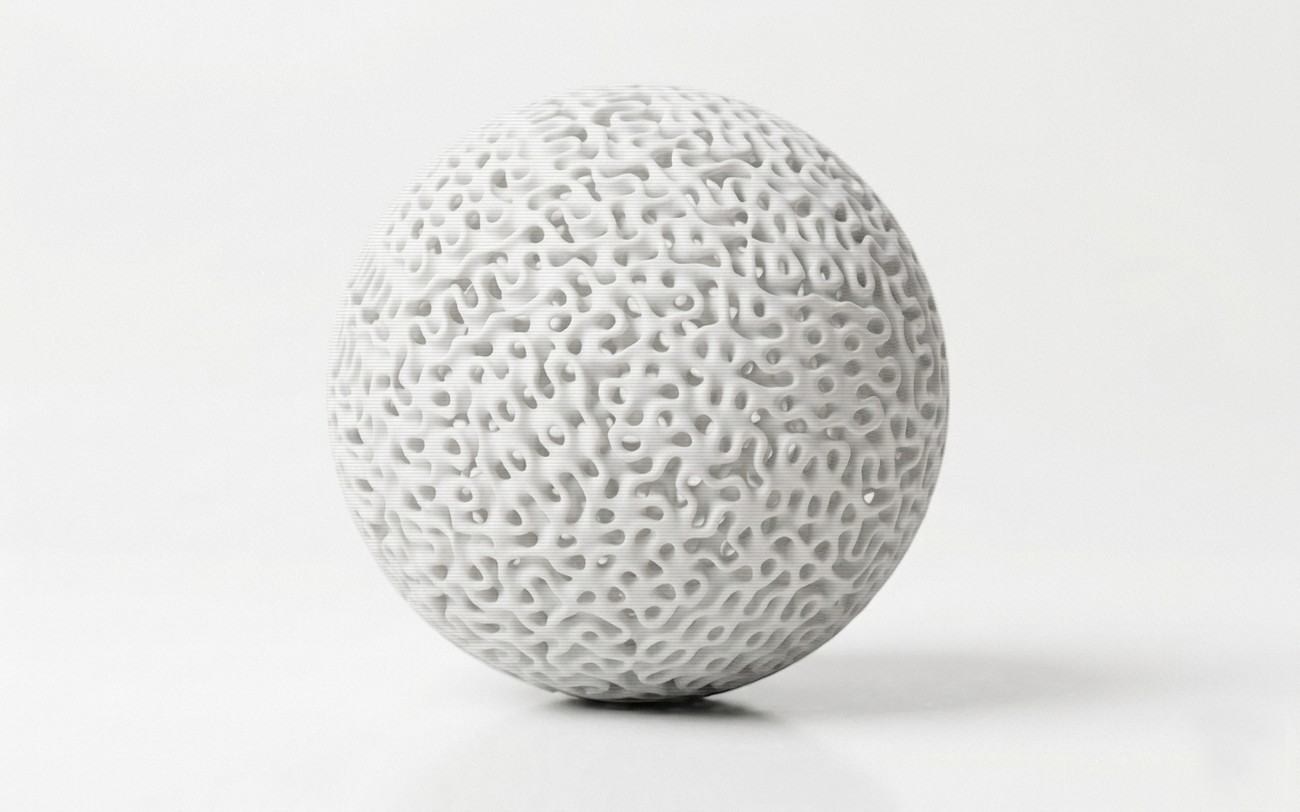
MOONBALL is a 180mm sphere built the way the moon was — by impact. Inside is a 15% gyroid lattice: a single continuous minimal surface that absorbs and returns force from every direction at once. No weak axis. No sharp corners for a crack to start from. Where the famous 3D-printed basketball printed a hexagonal grid, MOONBALL prints a landscape — lunar terrain you can hold. 1 of 100.
- DESIGNATION
- OBJ-001 / MOONBALL
- GEOMETRY
- 180 MM SPHERE
- STRUCTURE
- 15% GYROID · TPMS
- SURFACE
- CONTINUOUS MINIMAL SURFACE
- RESPONSE
- ISOTROPIC · OMNIDIRECTIONAL
- MATERIAL
- 3D-PRINTED POLYMER
- EDITION
- 100 UNITS · NUMBERED
- ORIGIN
- DESIGNED ON EARTH
- LEAD TIME
- 6–8 WEEKS
An Uncommonly Fluid Object.
The moon's surface was carved by impact over 4.5 billion years — and it's still here. MOONBALL's is engineered for it. A 15% gyroid lattice — one continuous minimal surface — absorbs and returns force from every direction at once, the way craters let the moon take a hit and endure. Where the famous 3D-printed basketball printed a hexagonal grid, we printed a landscape.
- ISOTROPICNo weak axis. Plays the same however it lands.
- NO STRESS RISERSOne continuous surface — nothing for a crack to start from.
- ENERGY RETURNFlexes and rebounds like a spring. True, tunable bounce.
- DAMPEDCurvature kills vibration — less sting, more control.
- FAULT-TOLERANTDamage one zone, the network reroutes the load.
- LIGHTERTarget integrity with less material.
Ready for Launch.
Impact at Any Angle.
A ball never lands the same way twice — it meets the ground at a random point every fall. A honeycomb or a grid has a grain: stiff along one axis, soft across another, so it rebounds differently depending on how it hits. A gyroid has no grain. Equal stiffness in every direction means it compresses and springs back the same no matter which way it lands — one true, repeatable bounce, drop after drop.
And with no sharp corners to concentrate stress, nothing fatigues. A honeycomb cracks at its vertices; a gyroid takes the ten-thousandth impact exactly like the first. Solid is a dead thud, foam swallows the energy — only a continuous lattice hands it back.
NASA Inspired.
Gravity Tested.
In 1970, Alan Schoen — a physicist at NASA's Electronics Research Center — went searching for the strongest structure that weighed almost nothing: geometry that could hold a spacecraft together with the least material possible. What he found was the gyroid.
Half a century later, that same geometry fills this sphere — almost nothing inside, built to survive everything. A structure the space program discovered, at the core of an object named for the moon. It was always going to end up here.
1970 · ALAN H. SCHOEN · NASA ELECTRONICS RESEARCH CENTERYour Number.
Your Crater.
Every unit is numbered and named for a real lunar crater — IAU nomenclature, real coordinates. Buy one and that name is yours: ten sectors, one hundred names, one keeper each. When they're gone, they're gone.
The Grails
The ten every eye on Earth has seen.- 001TYCHO43.3°S 11.4°WYoungest great ray crater — its rays span the whole visible disc
- 002COPERNICUS9.6°N 20.1°W“Monarch of the Moon” — the textbook impact crater
- 003ARISTARCHUS23.7°N 47.5°WThe single brightest spot on the Moon
- 004PLATO51.6°N 9.4°WThe dark-floored “Great Black Lake”
- 005KEPLER8.1°N 38.0°WBright ray star of Oceanus Procellarum
- 006CLAVIUS58.4°S 14.4°WSouthern giant with a perfect arc of craterlets
- 007GRIMALDI5.5°S 68.3°WDarkest floor on the Moon
- 008LANGRENUS8.9°S 61.1°ETerraced showpiece of the eastern limb
- 009PETAVIUS25.1°S 60.4°EA giant canyon cracks straight across its floor
- 010THEOPHILUS11.4°S 26.4°ETriple central peak, the classic telescope target
100 CRATERS · 100 UNITS · NO RESTOCK — EVER
Created on Earth.
Made for Space.
 NUMBERED 001–100
OBJ-001 · LUNAR OBJECTS
- MOONBALL object, numbered 001–100
- Machined display cradle
- Certificate of edition + logbook entry
- Archival foam flight case
Reserved on checkout · ships from Earth in 6–8 weeks
The Real Thing.
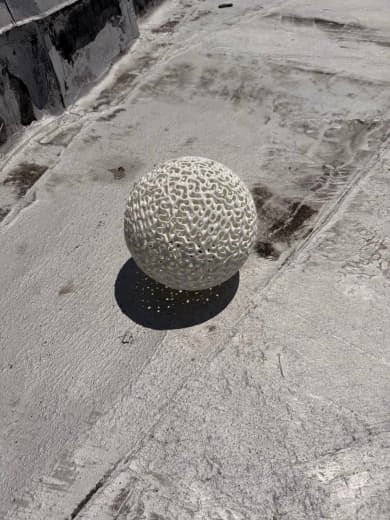
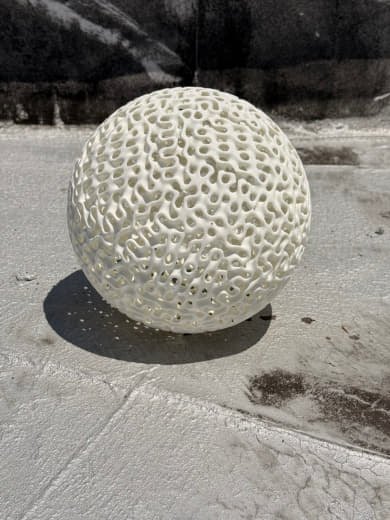
Not renders — the actual printed prototype, photographed in daylight. This is what 15% gyroid looks like in the hand.